Pivoting Business Toward a Sustainable Future.
Refined consulting for leaders who value insight over noise and impact over intention.
“If your organization touches people, resources, or systems, you benefit from ESG and SDG integration.”

What are the UN SDGs, and Why are they Important?
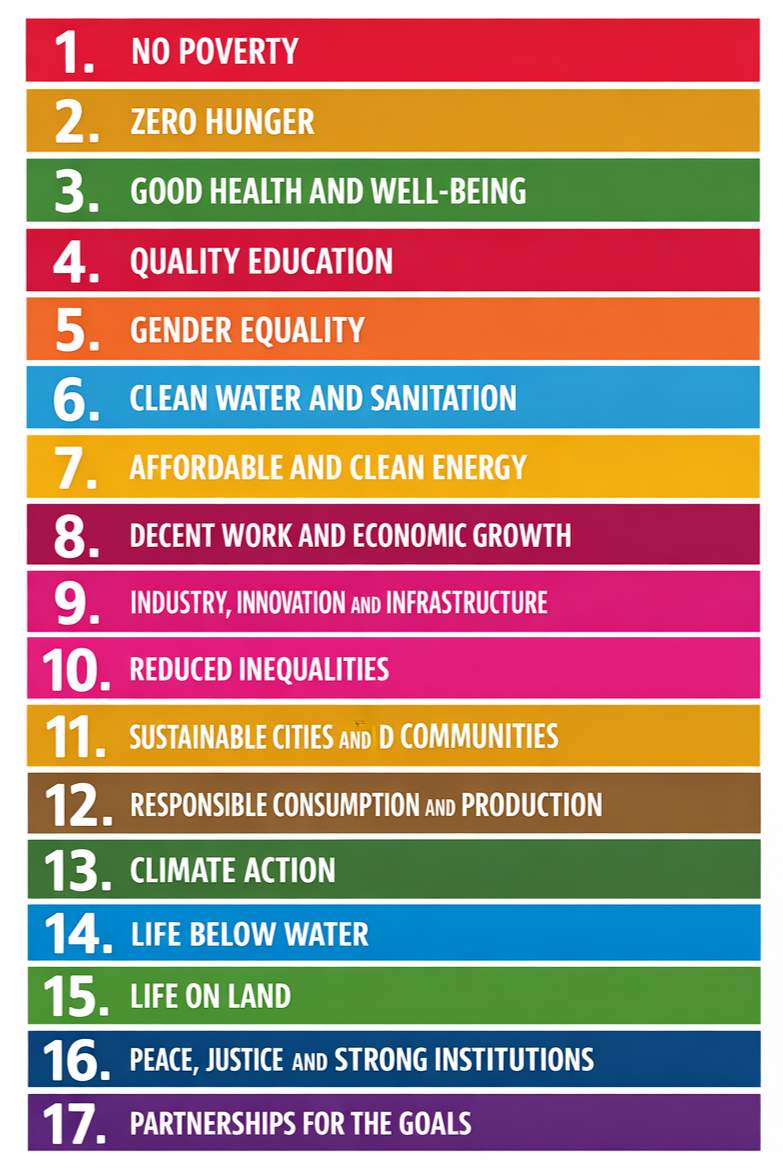
The United Nations Sustainable Development Goals (SDGs) are a set of 17 global goals adopted in 2015 to address the world’s most pressing environmental, social, and economic challenges, ranging from climate action and poverty reduction to quality education and responsible consumption. They provide a shared framework for governments, businesses, and communities to work toward a more sustainable and equitable future.
The SDGs are important because they create a common language for progress, helping organizations align their strategies with global priorities while measuring real impact.
For businesses, adopting the SDGs encourages more responsible practices, improving efficiency, strengthening governance, enhancing reputation, and opening opportunities for innovation and investment.
In everyday life, the SDGs promote healthier communities, better access to resources, and more inclusive systems, ultimately improving quality of life for individuals and societies alike.
Follow the link to learn more about the UN SDGs https://sdgs.un.org/goals.
Cultivating Excellence
A consultant brings focused expertise, objective perspective, and accelerated results to organizations facing complex challenges or companies that choose to “pivot” before becoming obsolete. By diagnosing root causes quickly, designing tailored strategies, and mobilizing best-practice solutions, consultants reduce risk and shorten the path to measurable outcomes. They provide flexible capacity, scaling resources up or down without long-term overhead, and transfer knowledge to internal teams so improvements endure.
Neutrality enables candid feedback and stakeholder alignment, while experience across industries introduces innovative approaches and proven frameworks. The net effect: clearer priorities, faster implementation, and stronger, sustainable performance.